40 effective ways to motivate employees
· Updated on November 20, 2023
Concrete ideas to strengthen the sense of belonging, retain your talent and boost your company's productivity.
Written by humans with heart, not by AIWhen we think of tech companies, we picture the fun employees have coding together and how motivated they are by their work. It's exactly this kind of company image that makes it possible to attract and retain the best talent.
Not only are engaged employees more loyal, they're also far more productive. Engaged employees put in 57% more effort at work, according to a PWC study. It's no surprise that companies with highly engaged employees have earnings per share 147% higher than their competitors.
When employees feel a sense of belonging to your organization, they create innovative products and exceed customer expectations. That's why engaging employees is essential.
Here are 40 ideas that will help you motivate your staff and boost your company's productivity.


Recognize and celebrate
Express your appreciation
Openly appreciate your colleagues' efforts and show them you notice their small everyday gestures. You'll be surprised by the power of a sincere compliment or a genuine thank-you.
Hey! We're not talking about signing off "thanks" in an email…
- Write a handwritten card to show your appreciation.
- Thank and praise them publicly during a meeting.
- Send a congratulatory email about the employee to your own manager, copying them on it.
Give your employee visibility and recognize their efforts often to keep them motivated at work.
Be transparent
Share your successes often. Share your tougher moments too. They'll appreciate being kept in the loop, and they may be able to help you.
A human heart is more moved by another's pain than by its own.Jean Baptiste Blanchard
Telling the truth in important moments fosters mutual support and shows you respect them. Remember that they might think of a solution you missed, or even work harder to thank you for your honesty…
Reward personally
The annual bonus is often seen as a given rather than appreciation for all the year's efforts. If you can, give your employees personal rewards throughout the year - smaller, of course, but more consistent and more sincere.
They love good food? Give them a gift card to a great restaurant.
They love surfing? Give them an outing to a surf park.
They love music? Give them tickets to that concert they keep talking about.
In short, show that you know your employee. The same dollar value takes on a completely different meaning when you can tell it comes from the heart. They'll tell their friends and be far more grateful! It's even good publicity for your company.
Remind them why you hired them
Think of each employee on your team and recall the qualities that led you to hire them.
Tell them what you saw in them during the interview and how impressed you were by their qualities, their experience and their work ethic… Reinforce the reasons their particular strengths are an asset to the company and why you believe they excel in their role.
Announce successes proudly
Pass along kind words from clients when they're satisfied.
Create a phenomenal atmosphere for sharing wins. Be funny, be authentic. You're probably familiar with the bell they ring in brokerage offices when a new sale is made… It's no accident that this way of announcing successes is etched into our memory!
Get a gong and strike it to gather the team around you when you have good news to share. Make it an event at every success to build a sense of pride in the team. Employee motivation guaranteed.

Give meaning and a vision
Leverage the company vision
Clearly define the company's vision and strategy. Include employees in developing them. Make sure everyone understands the impact of their contribution on the organization's success.
Don't take it lightly. Billion-dollar Zappos even offers employees a $2,000 bonus to quit! The company considers its company culture so important to its success that it would rather pay employees to leave than keep people who don't fully buy into its vision and values.
Do team activities
Build connections between team members:
- Host a BBQ at a team member's place.
- Organize happy hours. Cover the first drink to boost turnout.
- Bring in breakfast from the best local bakery.
- Take on an escape room.
- Leave the office at 3 p.m. to picnic by the lake, play a round of volleyball and paddle a bit.
Define how your company creates value
Your employees want to know they made the right choice in joining your company. Explain to them why their work makes a difference for others.
- Do you offer an extraordinary product or excellent customer service?
- Do you have an important social mission?
- Do you build personal relationships with your clients?
- Maybe you help them enjoy a better quality of life…
Also make sure every one of your community initiatives is valued. Show your environmental actions, the results of your donations or volunteer days concretely. Don't stop at saying you gave $50,000 in donations; explain how the money is used and what impact it has.
Psst. Subscribe to the newsletters of the organizations you support, like a breast cancer research foundation, and share their breakthroughs with your employees. Results are the fuel for effort. It's partly thanks to your efforts that progress is being made on such important causes…
In short, find what your company brings to the community and communicate it often.
Do the 52/17
The statistics show that employees are more productive when they take frequent breaks to then focus intensely on the task. DeskTime, a productivity app, analyzed the data of top performers and found that they work intensely for 52 minutes, then take a 17-minute break to clear their minds completely.
Encourage them to chat during breaks, play a game of ping-pong or go for a walk outside. Not only will they be more productive with frequent breaks, they'll also build more connections between colleagues.

Trust and give autonomy
Set up personal projects
Many innovative companies devote 10 to 20% of work time to personal projects to spark new ideas. Cultivating intrapreneurship helps motivate employees and retain the best talent in the company.
The 20% devoted to personal projects gave rise to Google's most popular products, including Gmail, AdSense and Google News.
Set aside Friday afternoon or Monday morning to encourage your employees' creativity, giving them free rein for a personal project tied to your industry. Let ideas develop at the office; it could well be a major innovation in your field and even your next success!
Although Google has changed its approach in recent years, this kind of program continues to benefit many innovative companies, including Microsoft, LinkedIn and Apple, which have relied on an intrapreneurial culture to motivate staff. CGI is an excellent example of this company-culture model, having set up mini-companies within the company itself.
Help them get to know themselves better
77% of people say they made a poor career choice, according to a survey published by the Globe & Mail. No wonder turnover is so high…
To retain and motivate your employees, help them identify what they're passionate about in their work. Vary the tasks and let them discover new interests they didn't know they had. Offer projects outside their usual area of excellence so they want to thrive in your company.
Try to distribute tasks in a way that meets everyone's interests, even if it means outsourcing certain tasks so your employees are more motivated. Calculate the cost difference between replacing an employee demotivated by their work and contracting out the paperwork to a consultant or a private company…
Don't micromanage
Give your employees latitude. Let them be autonomous and present you with the results of their projects rather than supervising every step. Show the trust you have in them and they'll reward you with high-quality work - and far more creativity.
Step into the arena at the right moments
Take part in office life and show that you're part of the team. Call an unhappy client yourself, compare two contracts or review a brochure when others no longer have the time. Seeing bosses and managers pitch in shows a lot of respect. Of course, it shouldn't be frequent. It's a very occasional kind of helping hand - otherwise it isn't cost-effective for the company.
Be humble. Ask for feedback
You frequently evaluate employee performance; be honest in return and ask them what you could do better. Show that you listen and understand the feedback they give you. Also give them the chance to share feedback anonymously.
Ask for advice
If you're at an impasse, ask your employees for advice even though you're their superior. This shows them how much you value their judgment and their contribution to the company. No need to play the alpha male… They might find the solution you've been looking for, and you'll only work better together.
Share your responsibilities
Break the top-down hierarchy and delegate. Give your employees important new tasks that take some load off you while motivating them through their work. And above all, tell them you're confident they'll succeed.
- Involve them in the hiring process. Can they review the job posting? After all, they're the ones who'll work most with the candidate.
- Give them a project to manage and the coordination of responsibilities across departments. They'll gain experience and build connections with other teams.
- Hold lunch-and-learns or market updates. Each week, an employee researches new trends and shares their findings with the team. Buy the pizza!
Develop and grow
Take your employees' career development seriously
Create a personal development plan for each employee.
Define the specific results and behaviours needed to reach the next level in the employee's career. Create measurable goals. You need to be able to say what percentage of the goal has been met for it to be effective.
Avoid generic measures like "Support the team on report delivery" or "Deliver such-and-such project in Q3 and make sure there are no errors." These goals yield little; they're really just the employee's job description.
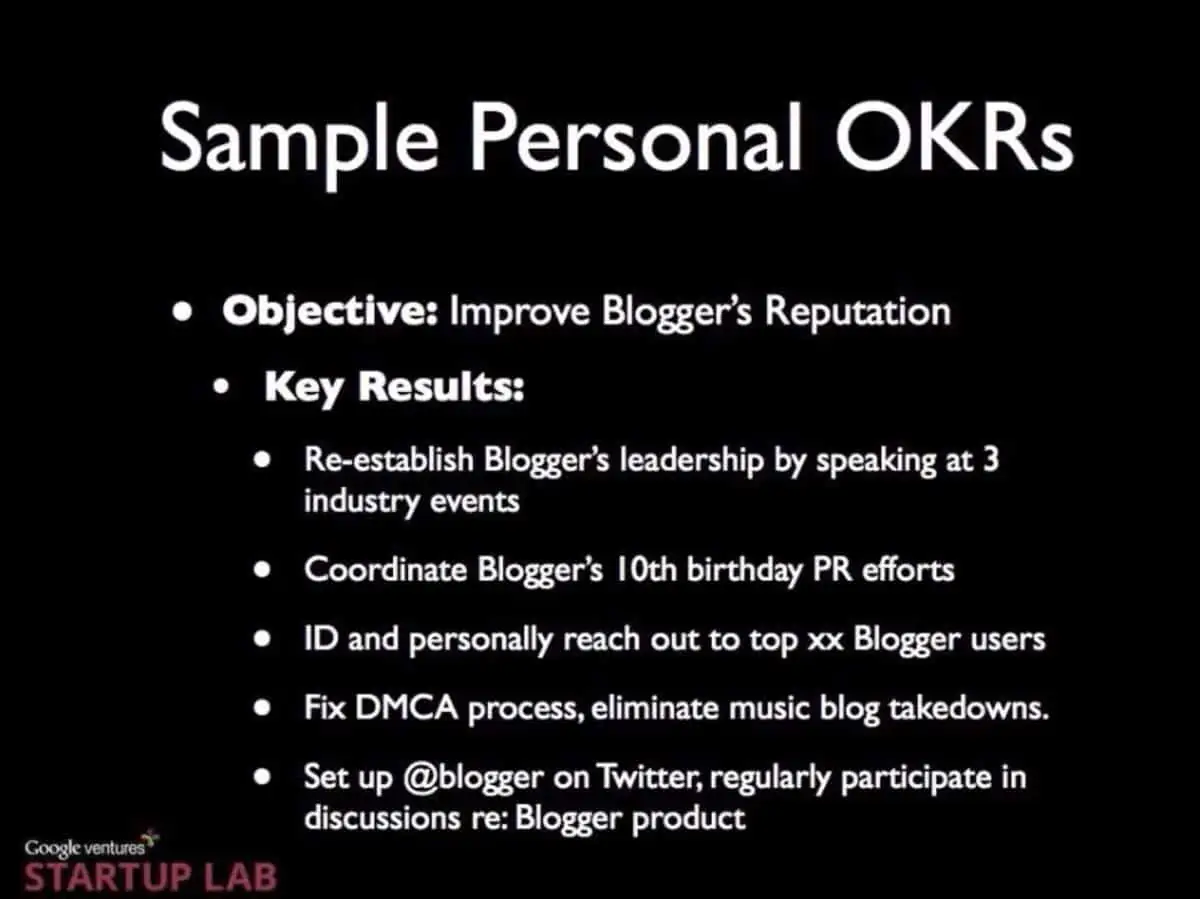
Instead, use Objectives and Key Results (OKRs) that measure the outcome. Google, for example, has used this kind of goal since its early days.
Set 4 to 6 OKRs per quarter and make sure to measure the outcome. If the employee always hits their goals, they aren't ambitious enough.
Mentor your employees to help them analyze problem situations. Support them in their learning. Get involved when they ask for advice. A concrete career plan is a major driver of staff motivation.
Share your success
By delegating tasks that provide visibility, you give your employees the latitude to make important decisions and accelerate the company's growth. Don't worry - they'll invest themselves in the tasks entrusted to them, and it will earn them your recognition, that of their colleagues and even that of the boss!
Bet on continuous learning
Creative people love learning new things. Let them learn new software, new theories or attend conferences. If your budget is limited, look into the webinars available for free.
The success of the week
During your team meetings, take a minute to spotlight someone who stood out this week. Explain how this colleague exceeded expectations - whether it's delivering a project, a training, a new skill, winning a client, and so on.
Each week, ask your more senior employees to suggest people who did impeccable work that week, and publicly show your appreciation to that employee.

Protect time and well-being
Invest in technology
Don't force your employees to work with your old machines just because they still run.
Investing in new computers may seem pointless in the short term if your current equipment handles ordinary tasks… Think ahead and think fast: a slow computer slows your team down, demotivates them and encourages them to take a little break every time it loads.
Equip yourself with powerful computers, 22-inch widescreen monitors and the latest Microsoft Office suite. It's faster, more powerful and more pleasant. Best of all, Microsoft has finally managed to offer fully collaborative work.
Don't break their flow
Interrupting people while they're in the zone isn't productive. Momentum matters when you're deeply focused on a task; that's when you produce your best work and feel captivated by it. It takes time to fully get back into it once you've been disturbed. If you see colleagues focused on their tasks, try as much as possible to hold off on what you need to ask them.
After being pulled out of deep focus, it's not unusual for people to take a little break before getting back to it…
Be flexible with the work schedule
Let employees decide their work schedule when they don't have meetings.
If your company policy is more formal, define the core of the day as mandatory office hours (for example, 10 a.m. to 3 p.m.), then let them decide how to arrange the rest of their working hours. If they can avoid traffic or organize their schedule to pick up the kids from daycare, they'll be far more productive and motivated during office hours.
A Cochrane study shows that choosing your own working hours is good for your health. Absenteeism is lower among healthy employees.
Fuel the passion for the work
Creatives perform best when they feel attached to the project they're working on. Put them fully in charge of a project. Build a timeline together and let them lead the project with all departments. Make them feel it's THEIR project and take the time to explain all the goals so the employee takes ownership of the project's mission.
Ask them what their goals are
Knowing your employees is crucial to keeping them motivated at work.
- Ask them where they see themselves in a few years.
- What do they enjoy doing at the office and outside of it?
- Who do they like working with? Who do they get along with less well?
- What are their daily and long-term challenges?
If you listen well, you'll gain the chance to know them better and to figure out how you can help them reach their goals within your organization.
Set deadlines
Have clear expectations by communicating deadlines. When employee motivation dips for various reasons, deadlines will spur them to deliver projects on time.
Careful! Be grateful when an employee finishes their work ahead of the deadline. Show them your gratitude. At the same time, if there are never any consequences for handing in work late, deadlines will have no effect on motivation - other than to demotivate further.
Laugh at failures. Don't punish them
You could lose excellent ideas if your company culture doesn't encourage innovation. Employees need to know that the failure of an important project won't harm them: they shouldn't feel that an unintentional mistake could push them away from a promotion or even closer to being let go.
Instead, create an environment where innovation is encouraged and where failure isn't the end. Laugh about it together and your employees will be much more willing to try new ways of doing things. In the long run, you'll come out ahead: think back to Google's personal projects; many of them were big failures. But the successful ones propelled the company.

Create human connection
Have lunch with your crew
Spend time with your employees to build team chemistry that has real impact. Take the time at least once a week to go to lunch with your colleagues and talk about something other than work. Even just 30 minutes if you're pressed for time, but take the time to know them and appreciate them as people rather than only as employees.
Focus on family
You might think your team is like your family, but most of them actually have a real family! Take the time to get to know the people who matter to your employees. A sincere relationship will help create a better work environment.
Get them involved in physical activities
Health affects employees' energy. The fitter they are, the more productive they'll be. Many offices organize friendly competitions internally or even with other companies. Tell your people about activities outside the office that could re-energize them - or organize them yourself!
- Look into Ultimate Frisbee or ball-hockey leagues and register a team for your company.
- Organize internal games or a scavenger hunt.
- Get step counters (a Fitbit, why not?) and make it a friendly competition.
- Use workout-tracking apps to build a leaderboard of the top runners.

Assign collaborative projects
Creatives love exchanging ideas and finding better ways of doing things. Working as a team is very motivating and helps speed up the creation of innovations.
Ask them how they're doing, sincerely
Build a real relationship. Take an interest in what they're going through and in how you can help them balance work and family life. Don't say "how's it going, what did you do this weekend?" just before talking about work; it's fake and it shows! Once in a while, in the morning, just ask how they're doing, simply and sincerely, without launching into work.
Be approachable
Everyone has their own personality. Some have to muster all their resources to come talk to you about things that bother them. Pay attention to what they tell you and try not to respond on impulse. Tell them you need to think about it, but that you'll explore the options. Don't say yes, don't say no right away. Think it over, but above all get back to them quickly with your decision.
Apply an open-door policy. Be easy to approach.
Create a tradition
Traditions are a very effective way to strengthen team spirit among colleagues while increasing their loyalty to the company.
Be memorable… within your budget. Involve your colleagues in establishing a tradition. Here are a few ideas to inspire you:
- Give a plant to every new hire.
- Celebrate every promotion on a patio with some appetizers.
- Welcome newcomers by asking them to bake a dessert for the team.
- Hold an annual party with fun activities. Call it your Pow-wow:
- Rent sumo suits one year.
- Play bubble soccer the next.
- Next time, hit up laser tag and go out for dinner.

Involve and innovate
Hold a monthly town hall
These meetings are unique opportunities to build a sense of belonging to the company. Employees are encouraged to ask questions about the company's strategies and results. Managers and directors can speak freely about the company's challenges, successes and action plans, so employees connect with the organization's mission and build a relationship of trust with you as a leader.
Here are a few ideas for your town halls:
- Review past and future goals.
- Invite directors from other departments for a Q&A session.
- Share presentations your team wouldn't otherwise see.
- Encourage employees to present to their colleagues.
- Brainstorm high-level initiatives.
Offer "no-meeting" days each month
No-meeting days give employees precious time to breathe, refocus and, above all, make progress on their projects without interruption. In short, time to be productive!
The bonus? Freeing up time also frees up employees' creative potential! A lighter schedule offers the chance to look for new ideas and experiment with them.
Grant the right to disconnect. And respect it
At 5 p.m., it's a fine time to wish each other "Have a good evening and see you tomorrow!"
By respecting the right to disconnect, you send the clear message that the organization values employees well beyond their productivity!
Drawing a clear line between personal and professional life prevents burnout and fosters well-being. We'd bet a well-rested employee will be far more effective than one who fell asleep on their keyboard!
Follow up on past conversations
Small frustration or great joy, new responsibility or new hobby, pain point or solution: whatever the nature of the conversations you have with employees, follow up!
By circling back to a suggestion or a problem an employee raised, you show them you listened and gave it thought.
Launch a reverse-mentoring program
What if we swapped roles?
With reverse mentoring, young talent shares their ideas, their command of new trends and their unique perspective with executives.
It's not just an exchange of knowledge - it's a lesson in humility for some and a boost of confidence for others: a winning combination to inspire the whole organization!
Create advisory committees with employees at all levels
Turn "we're stuck with decisions from above" into "we move forward together."
Whether it's a new tool, a new procedure or an office reorganization, advisory committees show that all opinions count and are heard, boosting motivation. And it reduces resistance to change!
Forty ideas, one common thread: motivation is cultivated through sincere, consistent gestures, not one big splash once a year.
Give your employees more than a voice
Create an inspiring, out-of-the-ordinary work environment based on their real needs with Amélio.
Discover AmélioTurn every employee into an ambassador
Download the ultimate guide to attracting the best employees to your company.
Download You'll receive the guide in under a minute. Remember to check your spam folder.