Amélio for boards of directors
Your board reviews every financial risk each quarter. What about the human risk?
Around the table, the same questions keep coming up: will our key talent stay, are our teams holding up, and will management see burnout coming before it shows up in the financial statements?
What the board can, and should, ask of management
Draft resolution
Whereasteam engagement directly affects the organization's profitability, safety and retention;
Whereasoccupational health and safety rules increasingly require employers to prevent psychosocial risks (in Quebec, since October 6, 2025);
Whereasthe departure of a key person or a team's burnout only shows up in the financial statements once the damage is done;
- an anonymous, structured measure of engagement and psychosocial risks, not impressions;
- results that are comparable over time, on the same factors, from one meeting to the next;
- a view by unit, to spot struggling teams without exposing anyone;
- a written action plan, with owners and deadlines;
- a follow-up on that plan, at every meeting of the relevant committee.

In Quebec, since October 6, 2025, every organization must assess, document and prevent psychosocial risks such as work overload, lack of recognition or harassment. The province's workplace health and safety board (CNESST) can step in.
What Law 27 requires →The board tracks results. It also needs to see how the teams delivering them are performing.
Performance and team climate, side by side
The board sees each team's performance and climate on the same screen, and can track both together.
See performance management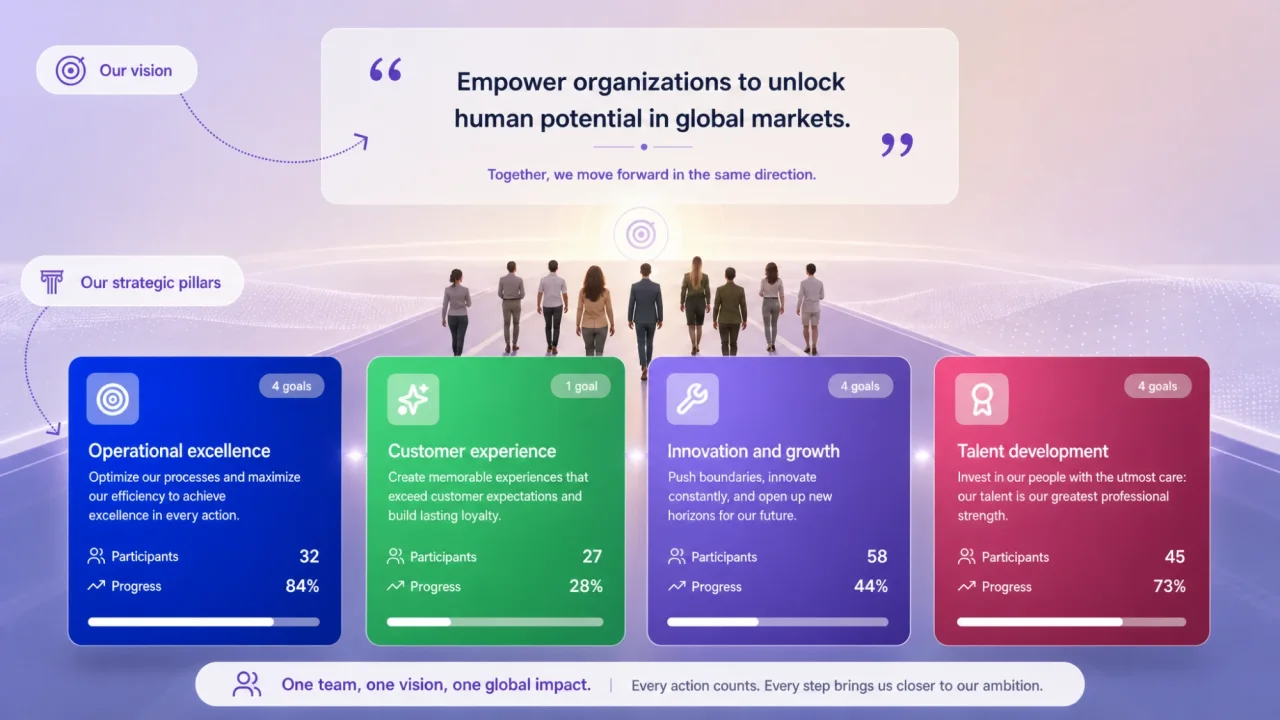
The strategic plan, tracked all the way to the teams
Each team's goals are linked to the strategic pillars the board approved, and their progress can be followed from one meeting to the next.
See goals and prioritiesGive the board a clear view of team performance.
Amélio connects performance management to each team's engagement results.
Human capital belongs in your core corporate reporting.
Human capital · report to the HR committee
Psychosocial risk factors (out of 10)
Action plan
Management note
EngagementPerformance
Executive succession, documented
The human resources committee sees where each key executive stands and what they still need for their next role.
See the development plan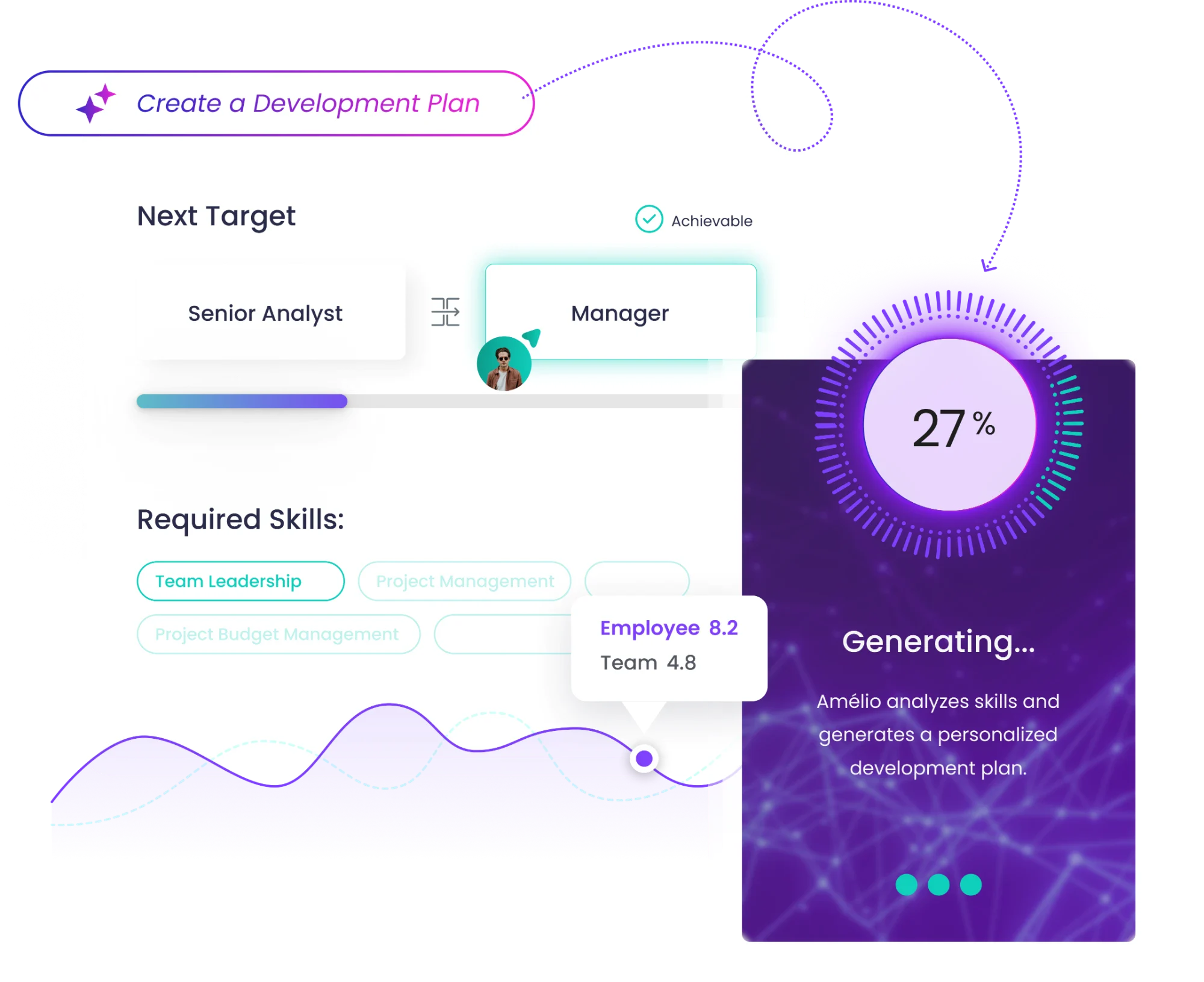
Why you can trust these numbers
A scientific method
The survey is built on the JD-R model: 12 factors and 38 sub-factors, with comment analysis.
Confidential at all times
Respondents' identities remain confidential and anonymous. Below a minimum participation threshold, no results are shown.
High participation
With 85% average participation, you hear from every team, not just the most dissatisfied.
Comparable over time
The same factors come back in every survey: you follow a trend instead of commenting on a snapshot.
Benchmarked against others
Industry benchmarks built on more than 750 organizations to put your results in context.
Protected data
Your data is hosted in Canada, with SOC 2 Type 2 certification and compliance with Quebec's Law 25 and the GDPR.

“Amélio is built into our governance practice. Engagement can stay stable month after month, but the strengths and the areas to improve in our culture change, and this practice lets us review them.”Frédérick Blanchette, CHRP, President, Solertia · Amélio user for more than seven years Read Solertia's story
Each committee asks its own questions
Human resources and compensation committee
Your questions
- Do our key people intend to stay?
- Is our leadership succession credible?
- Are our managers up to the task?
What Amélio brings
- Results by level and by unit
- Career progression and manager relationship factors
- Performance reviews and goals in the same platform
A standing agenda item, with the same indicators.
Governance and ethics committee
Your questions
- Are our values lived, or only displayed?
- Do employees feel safe raising a problem?
- Does our culture hold up through a period of change?
What Amélio brings
- Anonymous comments, analyzed
- Custom questions about your values
- Change management support
A full diagnostic, plus pulse surveys during major changes.
Audit and risk management committee
Your questions
- Where are our psychosocial risks, unit by unit?
- Is our approach documented in case of an inspection?
- Is the action plan really moving forward?
What Amélio brings
- Psychosocial risk diagnostic by team and at-risk group
- Action plans and year-over-year comparisons
- Expert support on psychosocial risk obligations, including Quebec's Law 27
Human capital entered in the risk register, with a measured indicator.
Nonprofit or co-op board
Your questions
- Is our small team holding up?
- How do we keep our people when we can't match private-sector salaries?
- How do we report to members and funders?
What Amélio brings
- Simple surveys, anonymous even in small teams
- Recognition and meaning at work, measured and strengthened
- A clear report to present at the general meeting
A realistic pace for a small staff.
What directors ask us
Can the board access the platform directly?
That's for you and management to decide. Most often, management presents the committee with a report drawn from Amélio, always in the same format. Results stay aggregated: no one, neither management nor the board, sees an individual response.
What stops management from dressing up the results?
A third-party platform does the measuring, with a consistent method and results that are comparable over time. The board can require that the same indicators be presented at every meeting, with no cherry-picking.
How does this help with our psychosocial risk obligations?
Occupational health and safety requirements, such as Quebec's Law 27, ask employers to assess, document and prevent psychosocial risks. Amélio measures these risks by team, produces action plans and keeps a record of year-over-year comparisons. See our psychosocial risk advisory services and the Law 27 guide (Quebec).
We sit on the board of a small nonprofit. Is this a good fit?
Yes. Participation thresholds protect anonymity even in small teams, and our organizational development advisors can support a small staff with no formal HR department.
See the four other questions
Management already shows us an annual survey. Why another one?
The board sees the results, but rarely what comes of them. Amélio links each result to an action plan for each manager and shows you whether those actions are moving forward, with the same indicators year after year. When a major change happens, a pulse survey tells you how the organization is taking it.
How often should this data be presented to the board?
A quarterly rhythm suits most HR committees. What matters is consistency: the same indicators, presented the same way, so you can see the trend.
Is our data secure?
Yes. It is hosted in Canada, with SOC 2 Type 2 certification and compliance with Quebec's Law 25 and the GDPR. All the details are on our Data security page.
Amélio measures engagement. What about our employees' performance?
Amélio also includes a performance management module: each team's performance and climate on the same screen, goals linked to the strategic pillars approved by the board, development plans that document executive succession, reviews and one-on-one meetings. Because it is connected to engagement results, management can present each team's performance to the board with its context, rather than an isolated score. See performance management.
Put human capital on your next agenda, backed by data.
See the report a committee receives, the indicators it can track and how management can produce it every quarter.
- Motion
- Personalized demo
- For
- Directors and management
- Commitment
- None
Not ready for a meeting yet? , a 5-minute video.